So you finally got your dream hairpiece. That’s exciting! But here’s the thing, most people don’t realize right away. Your new piece needs attention to stay looking fresh. I’ve worked with countless clients who came to me frustrated. Their once-gorgeous hair looked dull and tangled after just a few weeks. The secret? Proper wig care makes all the difference. With the right routine, your investment stays beautiful for years. Let me walk you through everything you need to know.
Why Proper Wig Care Matters for Long-Lasting Results
Think about it this way. You wouldn’t skip skincare and expect glowing skin, right? The same logic applies here. Good wig care protects the fibers from daily wear and tear. It prevents frizz, tangling, and that dreaded dull look nobody wants.
I’ve seen pieces last three times longer with consistent maintenance. Without it, even expensive human hair can look rough fast. The lifespan of your hairpiece depends entirely on how you treat it. A little effort goes a long way toward keeping things natural-looking and silky smooth.
Building Your Essential Care Kit
Before diving into routines, you need the right tools. A solid care kit sets you up for success from day one. Don’t worry, you won’t need to spend a fortune here. Just a few key items make your wig care routine simple and effective.
Start with a quality wide-tooth comb and a soft brush designed for extensions. These prevent breakage during detangling sessions. Add a wig stand to your setup, too. It keeps your piece shaped properly between wears. Trust me, these basics make everything easier down the road.
Must-Have Wig Care Products for Daily Use
Now, let’s talk wig care products specifically. You’ll want a sulfate-free shampoo that won’t strip moisture. Pair it with a hydrating conditioner formulated for delicate fibers. I personally love adding a leave-in conditioner for extra softness.
A good wig spray helps refresh your piece between washes. Look for formulas that fight static and add shine without buildup. Some clients ask about serum, too. A lightweight option works great for taming flyaways and adding that healthy glow. Keep silicone-heavy products minimal, though. They can cause long-term buildup issues.
How to Wash Your Human Hair Wig the Right Way
Washing seems straightforward, but technique matters more than you’d think. Start by gently detangling with your wide-tooth comb. Work from the ends upward to avoid pulling. This prep step prevents major tangles during the soak.
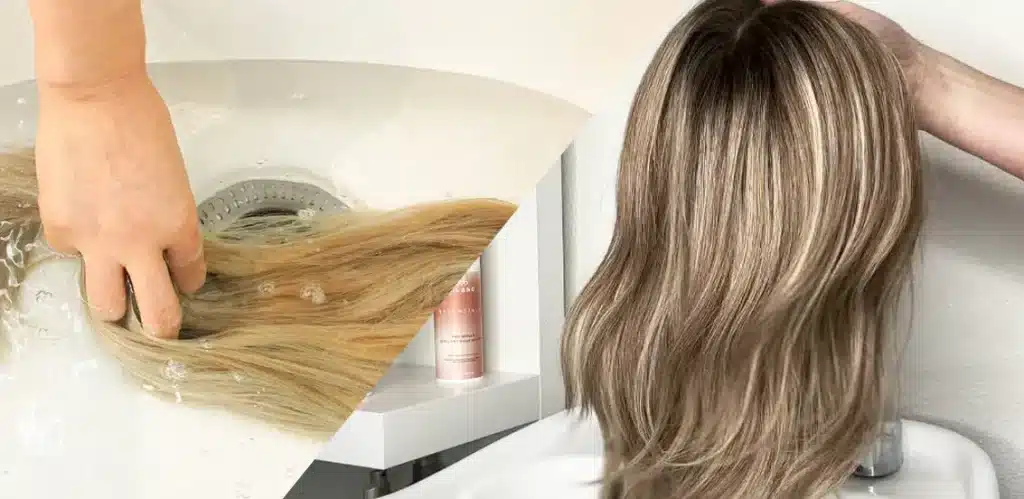
Fill a basin with cool water and add your wig shampoo. Let the piece soak for about five minutes. Swirl it gently; never scrub or twist the fibers. Rinse thoroughly until the water runs clear. Follow up with conditioner, focusing on the mid-lengths and ends. Proper wig care during washing extends the lifespan significantly.
Drying and Detangling Without Causing Damage
Here’s where many people make mistakes. Never wring out your hairpiece. Instead, press it gently with a towel to remove excess water. Aggressive handling causes breakage and frizz you’ll regret later.
Place your piece on a wig head or stand to air dry completely. Avoid direct sunlight and heat sources during this process. UV rays cause dryness and color fading over time. Once mostly dry, use your brush to gently work through any remaining tangles. Patience during this step pays off with smoother, healthier-looking hair.
Heat Styling Tips for Natural-Looking Results
Want to curl or straighten your human hair piece? You totally can with proper precautions. Heat styling opens up so many style possibilities. Just remember that even quality hair needs protection from high temperatures.
Always apply a heat protectant mist before using any hot tools. Keep temperatures moderate, around 300-350 degrees works well for most pieces. I tell my clients to turn up the heat slowly if needed. Starting lower prevents accidental damage. Section the hair and work gradually for the best natural-looking results every time.
Protecting Synthetic Fiber from Heat Damage
Synthetic hair requires different rules entirely. Most synthetic fibers cannot handle heat at all. Using curling irons or straighteners will melt and ruin the fibers permanently. Always check your piece’s specifications before attempting any heat styling.
Some newer heat-friendly synthetics exist now. These can tolerate low temperatures with care. Even then, keep settings minimal and use sparingly. Your wig care approach should always match the fiber type. When in doubt, stick to heatless styling methods. Foam rollers and braiding techniques create beautiful curls safely.
Storing Your Hairpiece on a Wig Stand
Storage might seem boring, but it’s actually crucial. Tossing your piece in a drawer creates tangles and crushes the style. Proper storage maintains shape and prevents unnecessary damage between wears.
Always place your hairpiece on a wig stand when not wearing it. This keeps the cap stretched correctly and the hair flowing naturally. Store away from direct sunlight to prevent color fading. A silk or satin bag adds extra protection during travel. These simple wig care habits keep your investment looking salon-fresh.
Simple Wig Care Habits for a Longer Lifespan
Let me share the daily habits that make the biggest difference. Small, consistent actions beat occasional deep treatments every time. Incorporate these into your routine and watch your piece thrive:
- Brush gently before and after each wear
- Spritz with a refreshing spray to fight static and dryness
- Remove before sleeping to prevent friction damage
- Avoid harsh hair spray products near the lace
- Schedule washes every 6-8 wears for daily use pieces
These wig care practices become second nature quickly. Your piece rewards you with longer-lasting beauty and easier styling. I’ve followed this exact routine for years with amazing results. The effort truly pays off when your hair still looks incredible months later.
FAQ
A: Washing frequency depends on how often you wear it. For daily use, aim for every 6-8 wears. If you use lots of styling products, wash more frequently. Over-washing strips natural oils and causes dryness. Under-washing leads to buildup and dullness. Find the balance that keeps your hair feeling fresh without overdoing it.
A: I really don’t recommend it. Sleeping creates friction that causes tangling and matting. The constant rubbing shortens the lifespan significantly. If you must sleep in it occasionally, wrap it in a silk scarf. This reduces friction damage somewhat. Ideally, place your piece on a stand overnight for best results.
A: Human hair acts like your natural hair. It can handle heat styling and regular products. Synthetic fiber requires gentler handling and specific formulas. Heat damages most synthetics permanently. Washing techniques differ slightly, too. Always identify your fiber type first. Then adjust your routine accordingly for optimal results.
A: Frizz usually signals dryness or product buildup. Try a hydrating conditioner treatment first. A light serum smooths flyaways instantly. Avoid touching the hair too much throughout the day. Static spray helps during dry winter months. If buildup is the culprit, clarify with a gentle sulfate-free shampoo.